
A woman with pale skin and dressed in white sits on a couch gazing into the distance to our left as she raises one arm to stroke a black cat perched on her shoulder in this vertical portrait. Shown from the lap up, the woman’s dress has voluminous, puffed, elbow-length sleeves and a high collar, and her narrow waist is cinched with a white sash. Her dark brown hair is parted down the middle and tied back, and she has pale blue eyes and pink lips. She reaches up to the cat with her left hand, on our right, and her other hand, farther from us, rests flat in her lap. The black cat looks at us with greenish-yellow eyes as it almost disappears into the dark brown background above the white couch, which is decorated with a blue pattern. The artist signed the work with dark letters in the lower left corner: “Cecilia Beaux.”
Cecilia Beaux, Sita and Sarita, c. 1921, oil on canvas, Corcoran Collection (Museum Purchase, William A. Clark Fund), 2014.79.1

Cats

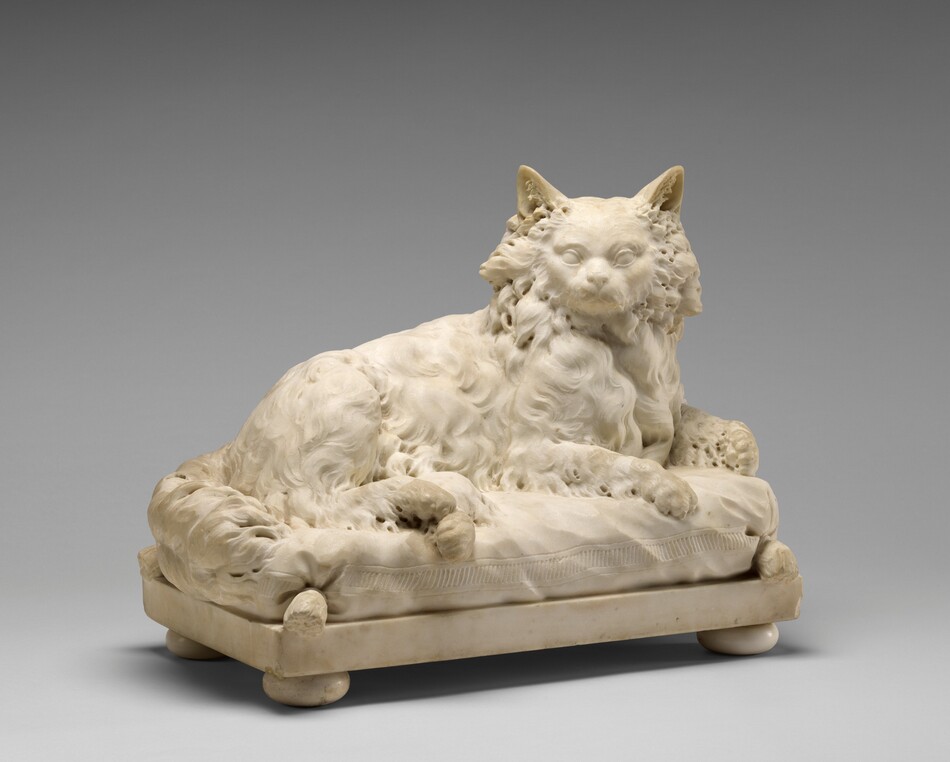
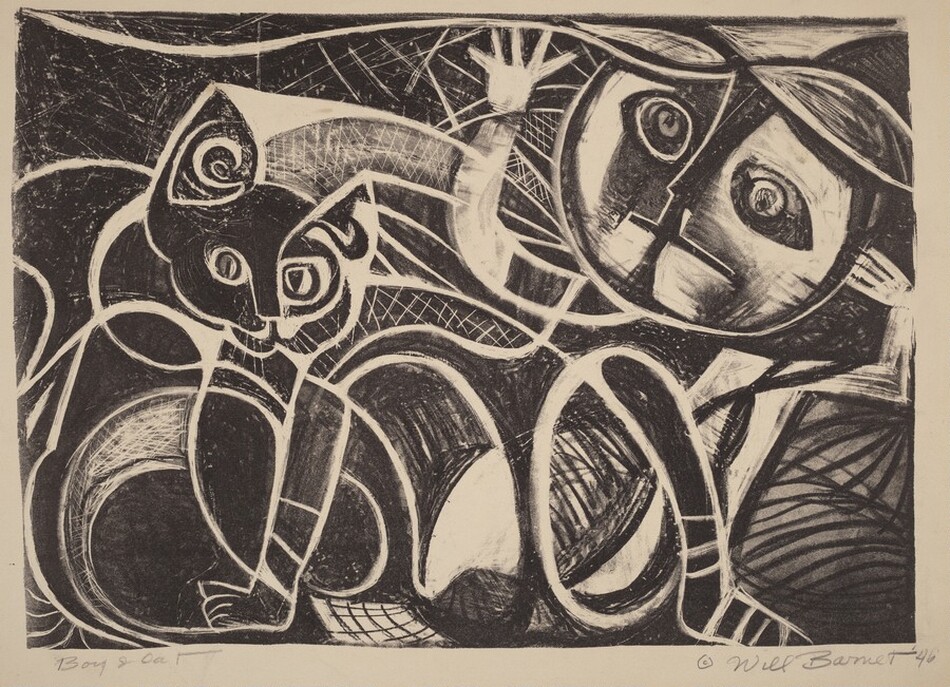
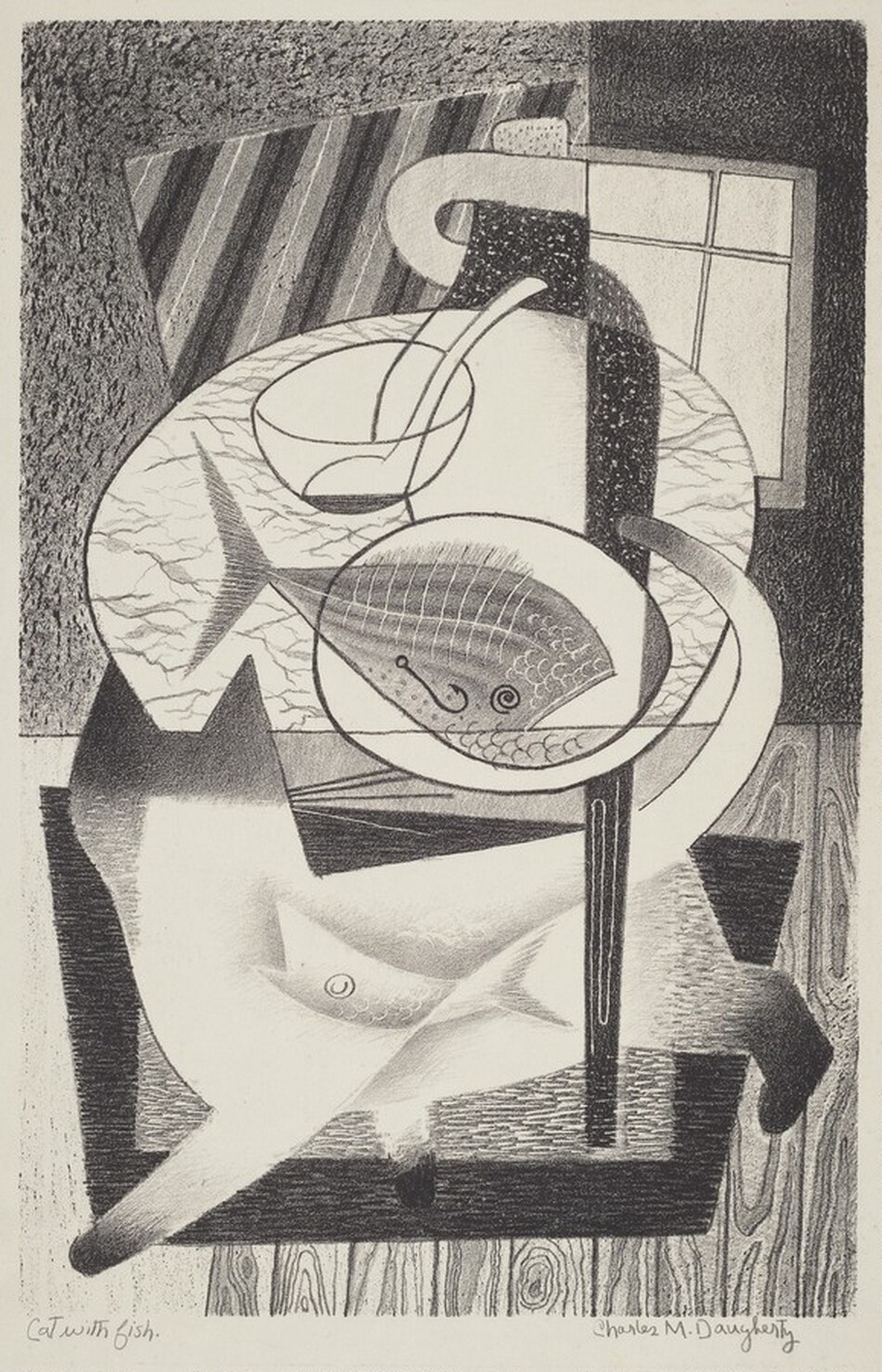
Cats have long served as popular artists’ muses, taking center stage in paintings, drawings, photographs, and sculptures. They can appear fearsome, as in Peter Paul Rubens’s den of lions. Or they can be cute and funny, as in Cecilia Beaux’s pictures of dainty kitten Sita. 
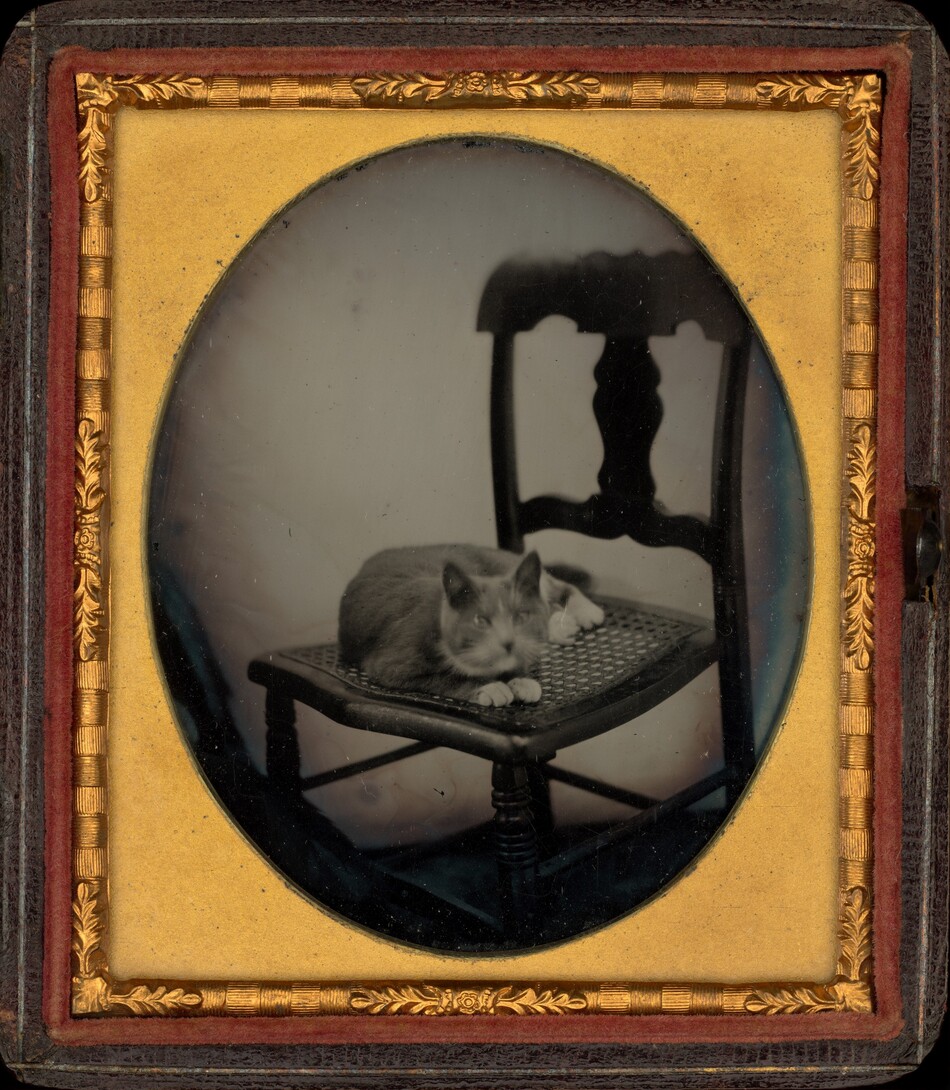
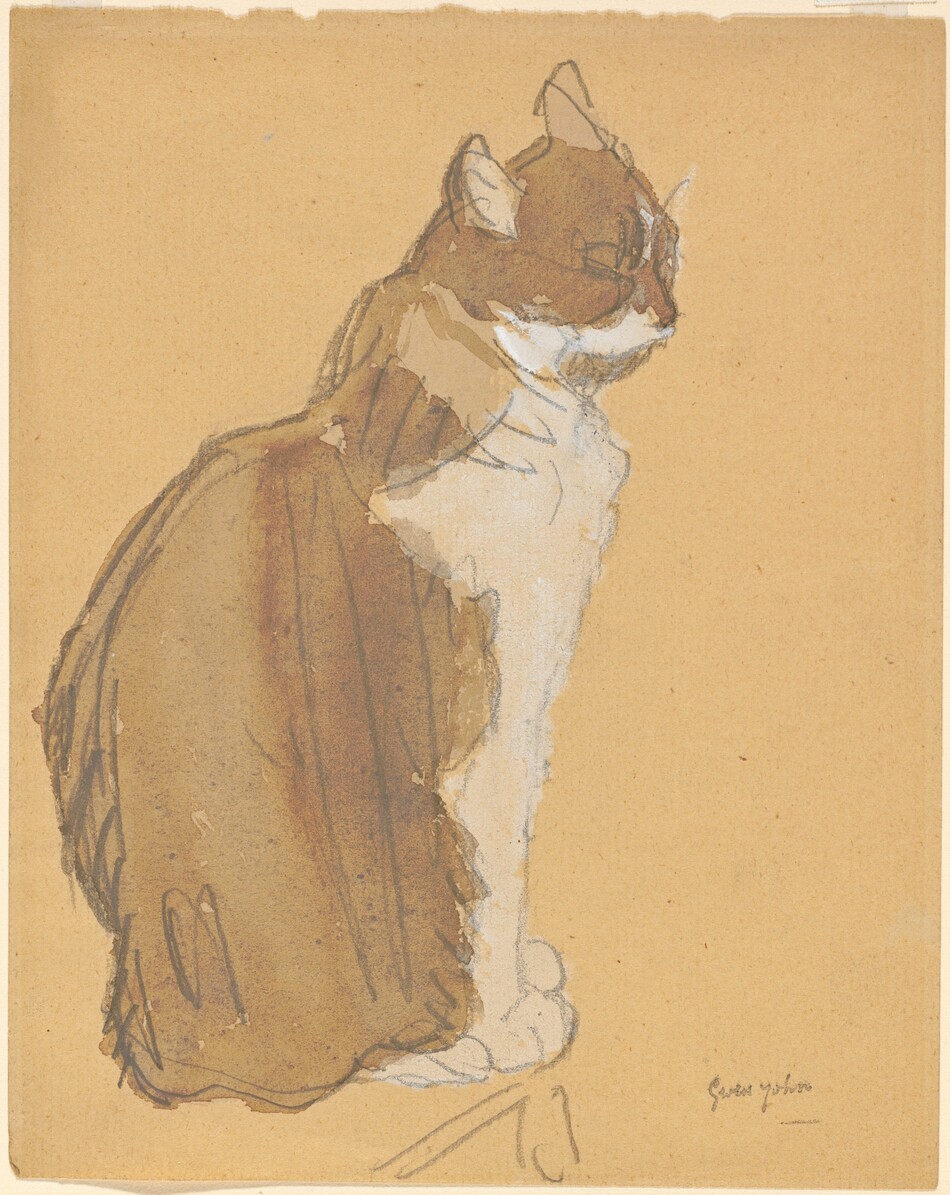
  • This is a painting of a seated cat facing the right. Its fur is depicted in reddish-brown tones, with white areas around the neck and chest. Its eyes are closed, and its front legs are straight, with its paws placed together. The lines outlining the cat are loose and fluid, capturing the cat's form with minimal detail. The background is yellow paper.
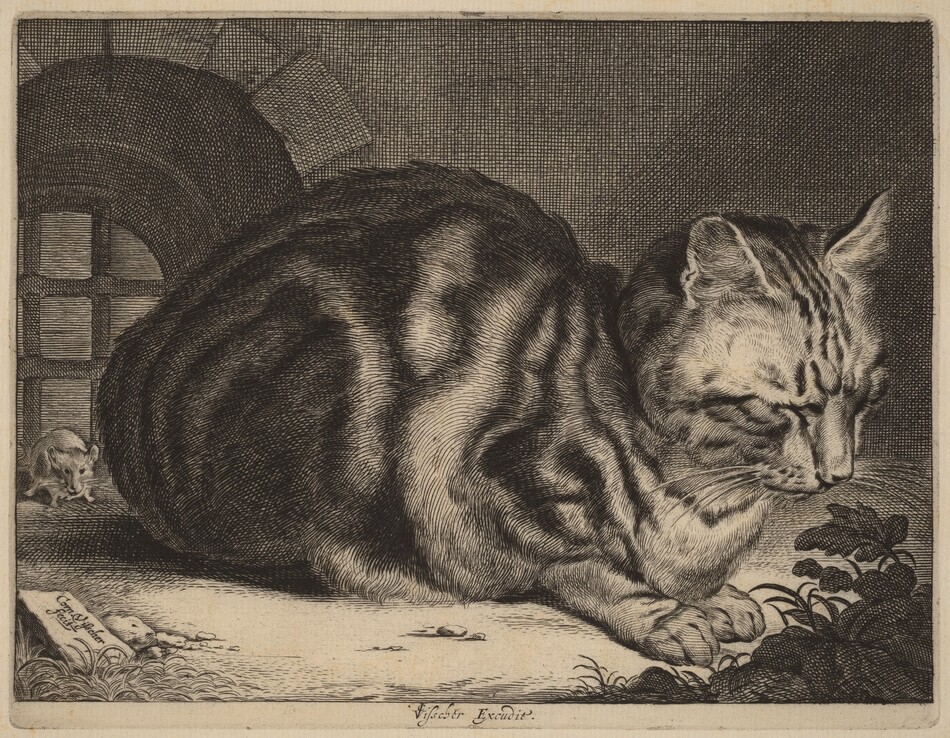
  • This is a print of a cat with its eyes closed, facing the right. Its paws are tucked together in front of its body, its ears are up, and its fur is striped in shades of light gray and black. On the left, a small mouse stands behind the cat, emerging from a grate in the wall. The ground is flat, and there are small plants in front of the cat in the bottom right corner. In the bottom left corner, a flat rock is embellished with the words "Corn. Visscher fecit."
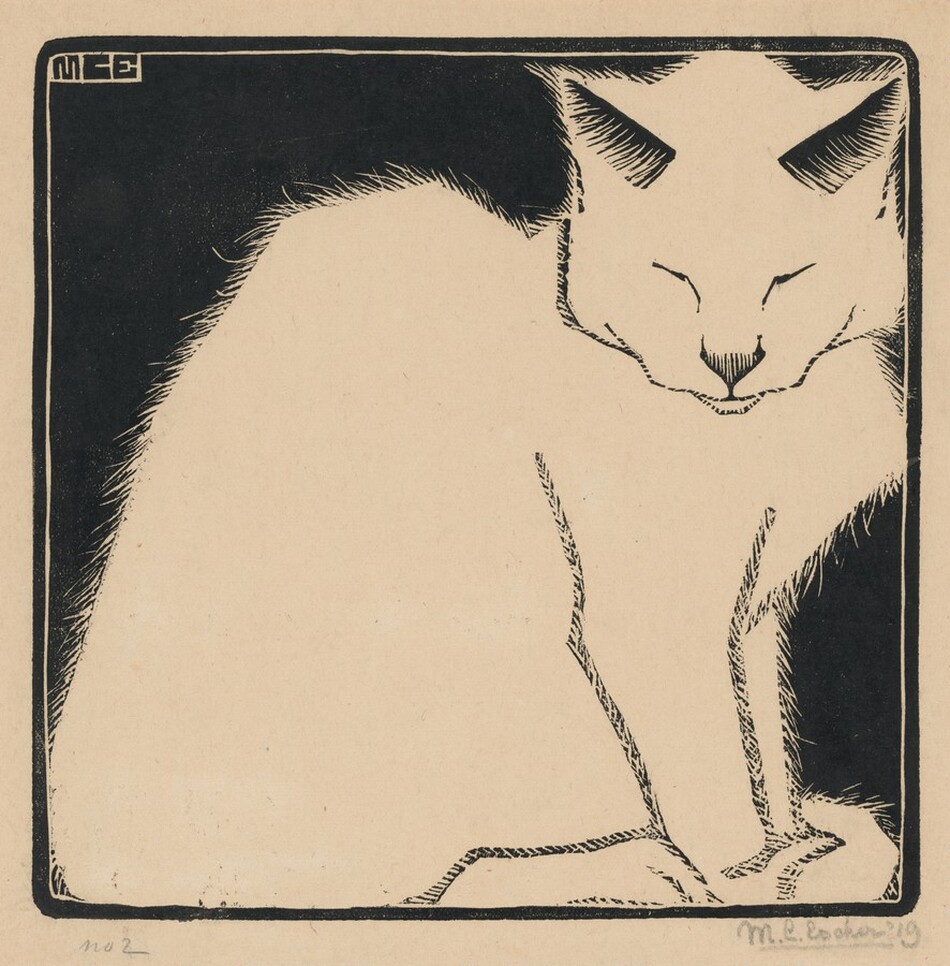
  • This print shows a white cat against a black background. The cat takes up almost the whole print, with its body towards the right and its face turned towards us. Its eyes are closed and its tail is wrapped around its feet. The cat's long fur extends slightly from its body in thin, white lines. There is a black outline around the print, surrounded by a border of tan paper.
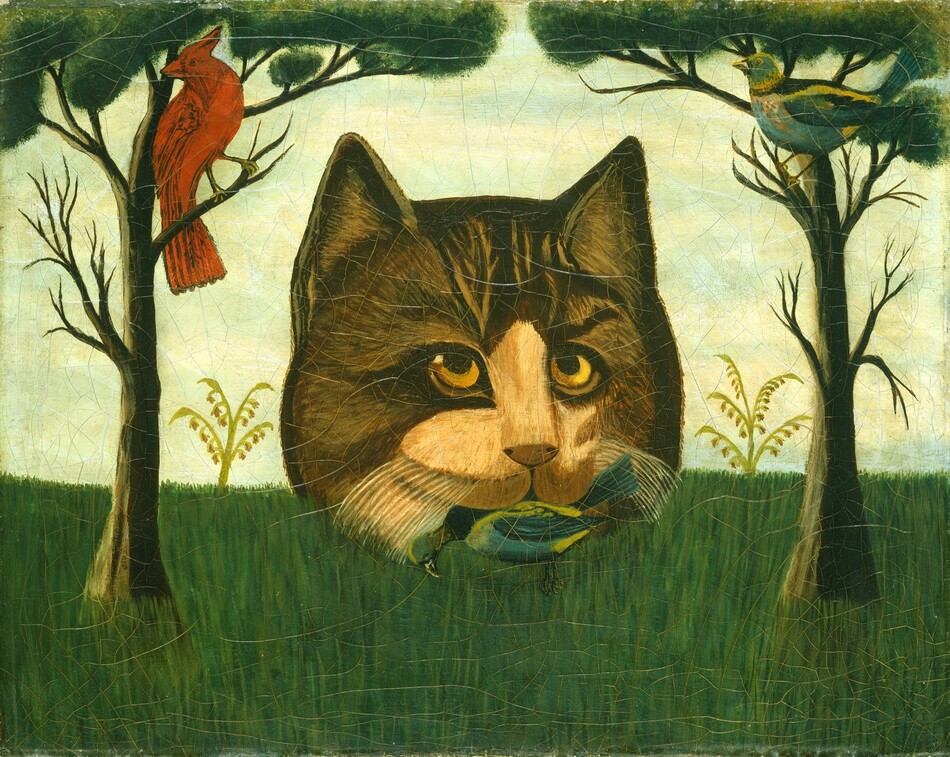
  • This is a painting of a large cat's head amidst birds in a forest setting. The cat's head emerges from tall grass, and the rest of its body is not visible. Its fur is a mix of brown and black with a cream area around its nose and cheeks, and it has long white whiskers. Its ears are pricked up, and its yellow eyes are looking upwards. In the cat's mouth is a bird with blue and green feathers, a black head, and a long black beak. To the left and right of the cat are two thin trees with birds in them; on the left is a bright red bird, and on the right is a bird with teal, green, and black feathers. The trees depicted have sparse branches with a few green leaves at the top. The sky behind the cat and trees is light blue.
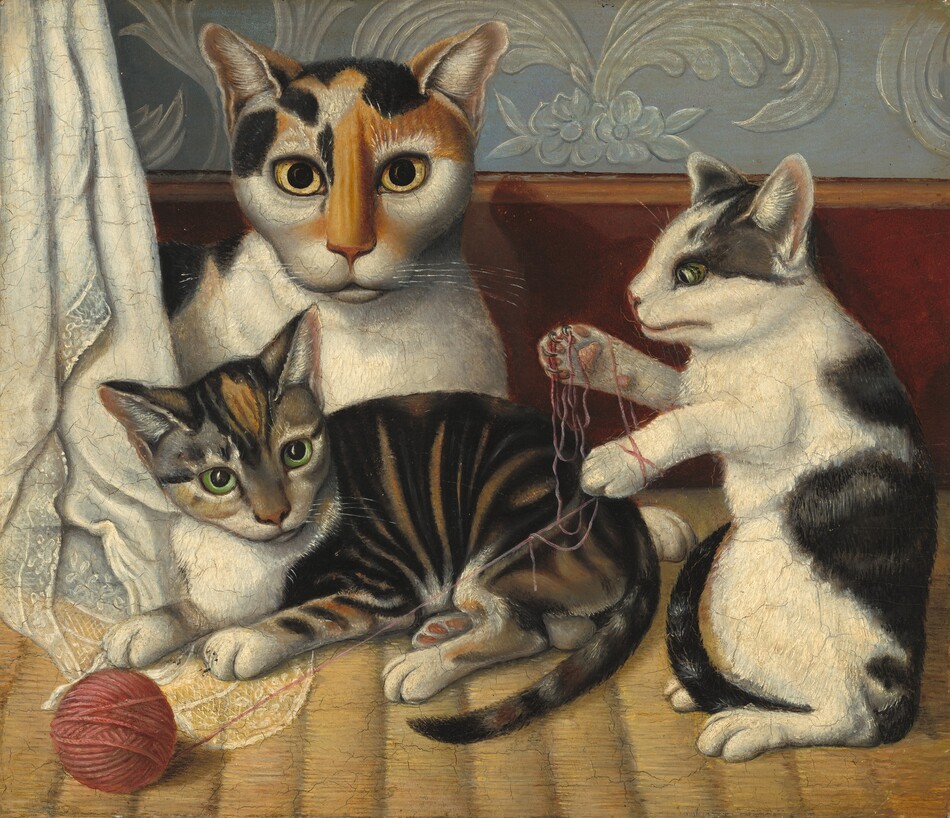
  • A short-haired calico cat and two kittens lie down or play with a ball of yarn in this horizontal painting. To our left, the largest cat has markings in honey brown and black over its face and along its spine, and the rest of its fur is white. Most of its body disappears behind a lace-trimmed cloth hanging along the left edge of the painting but it lies down so its chest faces us and it looks at us with piercing yellow eyes. One kitten lies in front of the larger cat so all four legs and its tail face us. It has caramel-brown, gray, and black stripes with white patches on its nose, chest, and paws. It looks off to our right with lime-green eyes. To our right, the other kitten rests up on its hind paws so its front paws are free to tangle the end of the carnation-pink yarn, which has rolled off a tidily wound ball to our left, in front of the other kitten. This kitten faces our left in profile and has white fur with flint-gray and black splotches along its spine, tail, and around its ears and eyes. The textured rug beneath the cats is straw yellow. A chestnut-brown baseboard spans the painting behind the cats, and the wall above is slate blue with stylized floral patterns in translucent white. The artist’s precise brushstrokes are especially noticeable in the cats’ fur and their shining whiskers.
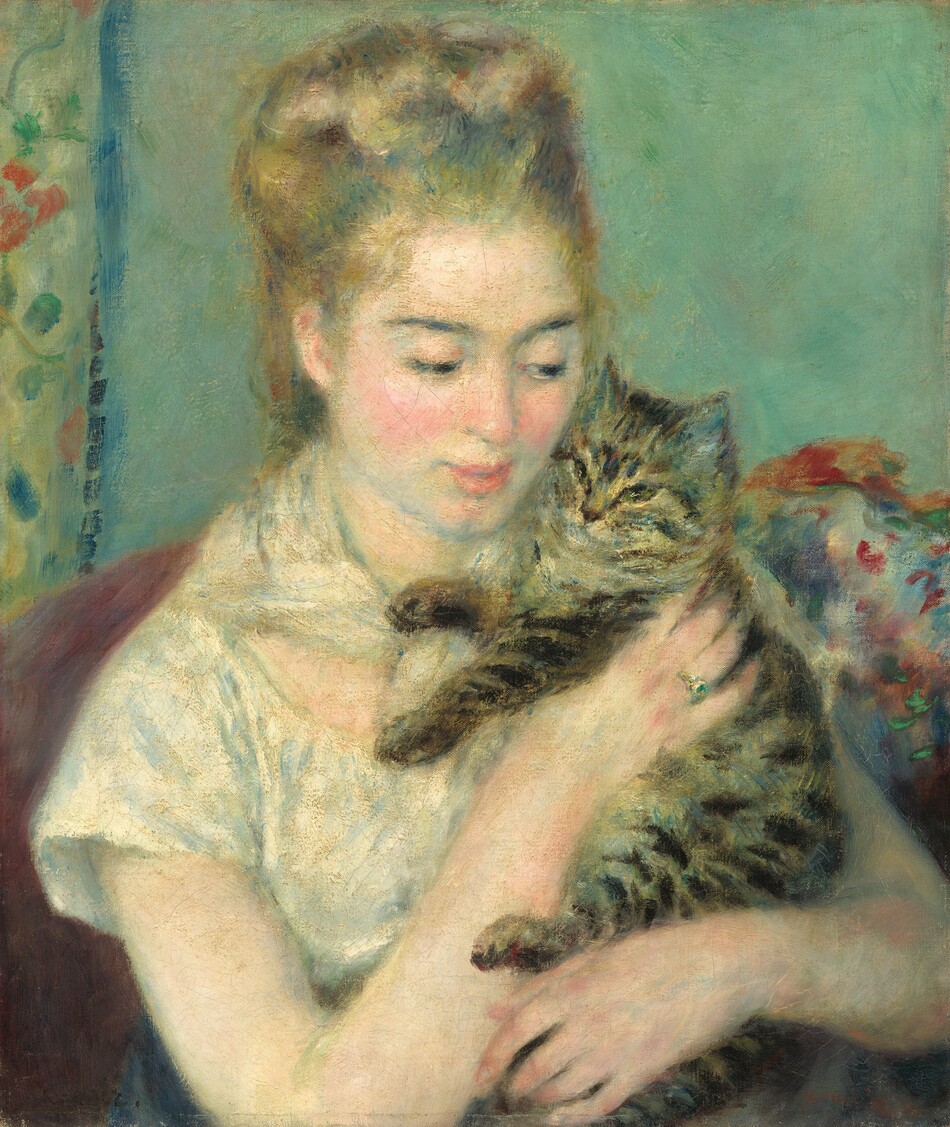
  • Shown from about the waist up, a young woman wearing white sits in an armchair cuddling a brown and black striped cat in this vertical painting. The scene is painted with blended brushstrokes, giving it a soft look. The wall behind them is seafoam green, and the edge of a yellow floral curtain lines the left edge of the canvas. The woman’s body is angled to our right and she looks at the cat with dark eyes. The woman’s light brown hair is pulled up, and her pale skin is accentuated by rosy cheeks. Her bare arms enfold the cat, held upright against the left side of her body so its head rests against her cheek. She supports the cat’s upper body with her right hand, on which she wears an emerald ring. The cat’s lower body nestles into the crook of the woman’s left arm. Its paws are extended and its head pulled back. The white and blue tones of the woman’s short-sleeved dress and kerchief tied around her neck contrast against the muted burgundy-red of the armchair behind her. To our right, behind the woman, vibrant, loose brushstrokes in red, orange, green, violet, and white could be a floral arrangement.

You may also like

A dog with short, curly, white hair stands in a wooden boat facing our right almost in profile, though it turns its head to look at us in this vertical portrait painting. The dog spans nearly the width of the canvas and is close to us. The dog’s ears hang down the side of its face to its chin. Its eyes are light brown and rimmed in black, and the lower lids are pink. The dog has a thick torso covered with tight curls, and it has a short puff of a tail. Its front legs are straight and the hind legs might be slightly bent. The dog stands on a slat spanning the width of the boat, which is angled away from us to our left. The landscape behind the has a calm, sage-green body of water with a tall, willow-like tree to our left and a lower band of leafy trees to our right. A few smoke-gray clouds float over the treetops in an otherwise pale blue sky.

Dogs

Dogs appear in art as everything from faithful companions and symbols of loyalty and protection to working animals and sporting partners. No painter of canines was more famous than Edwin Landseer. His works were so celebrated that a mastiff breed was named after him.
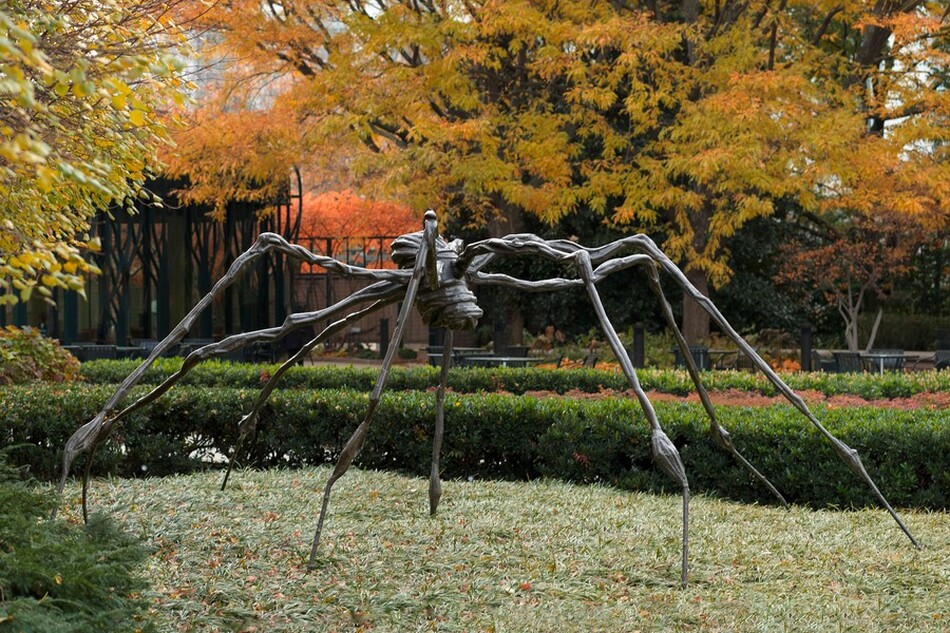
The sculpture has thin, elongated legs sprawled out in various directions. At the center of all the legs is a cylindrical shape elevated off the ground which appears to be a body. There are grooves and indentations along the legs and body. It has a dark, metallic appearance that contrasts with its surroundings. The setting is outdoors, in a garden or park area, with grass and hedges surrounding the sculpture. In the background, there are trees with foliage in shades of orange and yellow. There are also several outdoor chairs visible under the trees.

Sculpture

Sculptures come in many forms—from figures chiseled out of stone to interlocking pieces of metal suspended from a ceiling. They can be made of almost any material: marble, clay, silver, wood, bronze, steel, wax, pâpier-maché, and more.